
Skincare Routine for Sensitive Acne Prone Skin
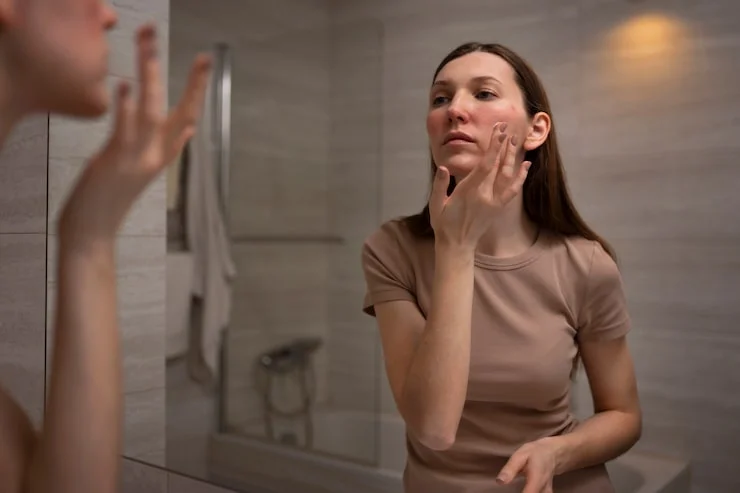
Finding a skincare routine that works for sensitive, acne-prone skin can feel impossible. Most acne products are designed to dry out pimples fast. They strip your skin, leaving it red, tight, and often more broken out than before. Then the gentle products made for sensitive skin often do not do enough to clear clogged pores.
This is the trap. Your skin has two problems that seem to fight each other. You need to clear breakouts, but your skin reacts badly to the ingredients that skincare routine for sensitive acne prone skin.
The way through is not stronger products. It is slower, gentler, and more patient. This guide walks you through exactly how to build a routine that calms your skin while still treating acne.
Why This Combination Is So Tricky?

Sensitive skin has a weaker barrier. That barrier is the outer layer that keeps irritants out and moisture in. When it is damaged, things that touch your face cause redness, stinging, and bumps .
Acne-prone skin produces too much oil and sheds dead skin cells unevenly. Those cells mix with oil and block pores. Bacteria grow in the blockage, and you get a pimple.
Here is the problem. The ingredients that clear acne, like strong acids and benzoyl peroxide, also irritate the skin barrier. When the barrier gets irritated, it becomes even more vulnerable. Your skin produces more oil to protect itself. More oil means more clogged pores. More clogged pores mean more acne .
So you end up in a cycle. You treat the acne, your skin gets irritated, the irritation causes more acne, and you treat it again. Many people with this skin type have actually damaged their barrier by using too many strong products .
The fix is to stop attacking your skin. Instead, you support it while treating the acne gently.
The One Rule That Changes Everything
Before we get into products and steps, there is one idea you need to understand.
Your moisturizer is part of your acne treatment.
That sounds strange. Moisturizer does not kill bacteria or unclog pores. But a damaged barrier causes inflammation. Inflammation is what turns a small clogged pore into a big red pimple . When you keep your barrier healthy, your skin is less likely to react to every little clog.
So when you apply a calming moisturizer, you are not just adding moisture. You are lowering the chance that your skin will explode into a breakout.
This means you should never skip moisturizer, even if your skin feels oily. Oily skin can still have a damaged barrier. In fact, oily skin that is also sensitive is often dehydrated underneath.
Read Also: Skincare Routine For Oily Acne Prone Skin
Morning Routine
Your morning routine has one main goal: protect your skin without stripping it. You do not need active acne treatments in the morning. Save those for night.
Step 1: Gentle Cleanser
Wash your face with lukewarm water and a gentle, fragrance-free cleanser. The goal is to remove oil and sweat from the night without disturbing your barrier.
Look for cleansers that do not foam much. Foaming cleansers often contain ingredients that strip your skin. A creamy or gel cleanser that leaves your skin feeling comfortable, not tight, is ideal .
How to do it: Wet your face with lukewarm water. Apply a small amount of cleanser with your fingertips. Use slow, gentle circles. Do not scrub. Rinse well and pat dry with a clean towel. Do not rub.
If your skin feels tight or squeaky after cleansing, your cleanser is too harsh. Switch to something gentler.
Step 2: Calming Moisturizer
Apply a lightweight moisturizer while your skin is still slightly damp. This helps lock in water. Look for ingredients like ceramides, panthenol, or centella. These calm redness and help repair the barrier .
Use a pea-sized amount for your whole face. If your skin is very oily, a gel moisturizer works well. If it is drier, a cream is fine.
Step 3: Sunscreen
This step is not optional. Sun exposure darkens acne marks and makes them last longer. It also damages your barrier further. But many sunscreens irritate sensitive skin, so choose carefully.
Mineral sunscreens with zinc oxide or titanium dioxide are usually gentler than chemical sunscreens . Look for fragrance-free formulas. Some people with sensitive skin also react to chemical filters like oxybenzone .
If you are worried about breakouts from sunscreen, look for labels that say non-comedogenic. That means the product is less likely to clog pores.
Night Routine
Night is when you treat the acne. But even here, you need to be careful. Start with the gentlest active and use it only a few nights a week.
Step 1: Remove Sunscreen and Makeup
If you wore sunscreen or makeup, remove it first. A gentle cleansing oil or micellar water works well for this. Massage it onto dry skin, then add a little water to emulsify, and rinse.
Then follow with your regular gentle cleanser. This two-step process, called double cleansing, makes sure everything is off without scrubbing your skin raw.
If you did not wear sunscreen or makeup, one cleanse is enough.
Step 2: Active Treatment (Start Slow)
This is the step that actually treats acne. The key is to start with the mildest option and use it only once or twice a week at first.
Azelaic acid is often the best starting point for sensitive acne-prone skin. It fights acne bacteria, reduces redness, and helps fade marks. It is much less irritating than benzoyl peroxide or strong acids .
Salicylic acid at low strength, around 0.5 to 1 percent, is another option. It helps unclog pores. But it can still be drying, so start with a low concentration and use it sparingly .
Benzoyl peroxide works well for acne, but it is harsh. If you want to try it, use a low-strength wash and leave it on for only a minute before rinsing. This is called short-contact therapy. It gives you the benefit with less irritation .
How to apply: After cleansing, wait until your skin is completely dry. Apply a small amount of your chosen active. Use it only on areas where you break out, not your whole face. Start with once a week. If your skin tolerates it, increase to twice a week, then three times. Stop if you get stinging, burning, or peeling.
A good rule is to give your skin two nights of rest between each active night when you first start.
Step 3: Moisturizer
Apply the same calming moisturizer you use in the morning. This step is especially important on active nights because it helps buffer the treatment and support your barrier while you sleep.
If your skin feels dry or irritated from the active, you can apply moisturizer first and then the active on top. This is called buffering. It reduces irritation while still letting the active work .
What to Avoid
Certain ingredients and habits make sensitive acne-prone skin worse. Steering clear of them can make a bigger difference than adding new products.
Alcohol and fragrance are two of the biggest offenders. Both dry out and irritate the skin. Fragrance can be natural or synthetic. Essential oils count as fragrance. If a product smells strongly, it is probably not right for your skin .
Physical scrubs with beads, shells, or pits tear at your skin and spread bacteria. Skip them entirely .
Harsh toners with witch hazel or menthol feel refreshing but strip your barrier .
Coconut oil and cocoa butter are too heavy for acne-prone skin. They clog pores .
Sodium lauryl sulfate is a harsh detergent that makes cleansers foam. It strips your skin and causes irritation .
Also avoid picking at your skin. It pushes bacteria deeper and skincare routine for sensitive acne prone skin .
How Long Until You See Results?
This is the hard part. Gentle routines take longer. You might see some improvement in two to four weeks, but real clearing usually takes six to ten weeks .
That feels slow. But the alternative, using harsh products that irritate your skin, often makes things worse and keeps you stuck in the cycle.
Be patient. Take photos every week so you can see small changes. Do not add new products when you feel impatient. Give each change at least four weeks before judging it.
You May Also Like: How To Stop Under Eye Concealer Creasing Mature Skin
Frequently Asked Questions
Can I use retinol if I have sensitive acne-prone skin?
Retinol can help with acne and marks, but it is strong. Start with a very low strength, use it once a week, and buffer it with moisturizer. Some people with very sensitive skin do better with azelaic acid instead. If retinol causes burning or peeling, stop and wait until your barrier is stronger .
My skin stings when I apply products. Is that normal?
A brief mild tingle that fades in a minute can happen. Stinging that lasts, burns, or turns your skin red is a sign your barrier is damaged. Stop all actives and use only cleanser and moisturizer for one to two weeks. Then try again more slowly .
Could my breakouts actually be irritation instead of acne?
Yes. Small bumps that appear quickly after trying a new product often mean irritation, not true acne. They cluster where you applied the product and do not form whiteheads. These clear when you stop the irritating product, not when you treat them harder .
Do I need to use acne products all over my face?
No. Apply treatments only where you break out. Using them everywhere increases irritation without any benefit.
How do I know if my skin barrier is damaged?
Signs include redness, stinging, tightness, flaking, and breakouts that get worse when you use acne products. If you have these signs, pause all actives and focus on gentle cleansing and moisturizing.
A Sample Routine to Start
Here is a simple plan to begin.
Morning:
Gentle cleanser, calming moisturizer, mineral sunscreen.
Night:
- Gentle cleanser. Then on one night, apply azelaic acid to breakout areas. On the other nights, just moisturize.
- Do this for two weeks. If your skin feels calm, add a second azelaic acid night. Build up slowly.
- That is it. No ten-step routine. No harsh scrubs. No burning toners.
- The most effective thing you can do for sensitive acne-prone skin is to stop fighting it. Support your barrier, treat gently, and give it time. Your skin will thank you.